








Global Vessel Market 2026
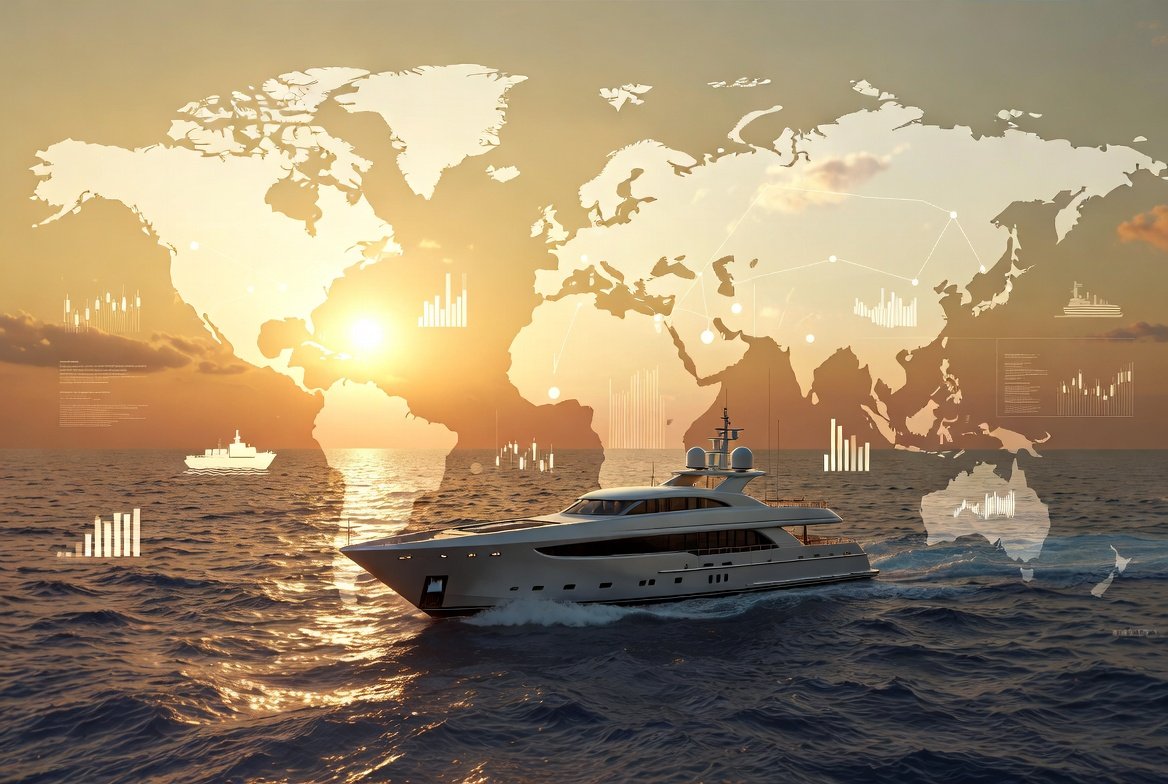
Interest Rates, Fuel Costs and Geopolitical Risk Reshape the Marine Industry
The global vessel market entered 2026 in a structurally different environment than the expansion cycle of 2021–2023. Rising interest rates, volatile fuel prices, geopolitical instability and changing buyer behavior are reshaping yacht, cargo and commercial marine markets worldwide.🇪🇺 Europe
Brokerage Stability and Premium Production CapacityEurope remains the world’s dominant yacht production and brokerage region. 🇮🇹 Italy, 🇫🇷 France and 🇪🇸 Spain continue leading the Mediterranean luxury marine market through shipbuilding, charter infrastructure and refit ecosystems.
The strongest resilience is visible in modern brokerage yachts, explorer vessels, premium charter platforms and high-spec sailing yachts. Older production boats increasingly require discounts or refit incentives to remain competitive.
🇦🇪 Gulf Region
Dubai and Saudi Arabia Drive Luxury Marine GrowthThe UAE 🇦🇪 and Saudi Arabia 🇸🇦 are becoming the fastest-growing luxury marine markets globally. Massive investments into marinas, waterfront projects and tourism infrastructure are repositioning the Gulf as a permanent international yachting hub.
Projects such as Dubai Harbour and Sindalah Marina continue attracting ultra-high-net-worth buyers, superyacht operators and international charter activity.
Demand remains strongest for superyachts, explorer yachts and custom new builds.
🇨🇳 China & Asia
Hainan Emerges as a Strategic Marine HubChina 🇨🇳 continues expanding marina infrastructure, domestic yacht production and marine tourism investment. Hainan is increasingly positioned as a regional luxury marine destination with tax incentives and free-trade advantages.
Chinese shipyards continue improving production quality, electronics integration and pricing competitiveness. European builders still dominate trust and resale liquidity, but Asian pricing advantages are becoming increasingly relevant.
🇯🇵 Japan
Infrastructure and Technical Precision Support Long-Term GrowthJapan remains a smaller but increasingly strategic marine market. Strong engineering capabilities, growing superyacht infrastructure and geographic advantages support long-term development.
The market remains constrained by limited marina capacity and lower international brokerage integration, but Japan is becoming increasingly relevant for Pacific operations, technical refits and explorer yacht routing.
🇿🇦 South Africa
Export-Oriented Multihull Production ExpandsSouth Africa continues playing a disproportionately important role in global catamaran and multihull production. The sector remains highly export-driven and sensitive to currency fluctuations.
Cape Town has become one of the most important multihull production clusters globally, benefiting from lower production costs, composite expertise and strong sailing conditions.
🇦🇺 Australia
Lifestyle Demand Supports Stable Vessel OwnershipAustralia remains one of the strongest high-income leisure boating markets globally. Demand remains solid across motor yachts, sport cruisers and premium recreational vessels.
However, rising marina fees, insurance premiums and fuel costs increasingly affect ownership economics and operational planning.
🇪🇬 Egypt & Red Sea
Strategic Shipping Geography Gains ImportanceEgypt is increasingly relevant due to its strategic position around the Suez Canal and Red Sea corridor. Marina projects, tourism expansion and marine infrastructure investments continue strengthening the region’s long-term marine relevance.
At the same time, Red Sea instability and shipping disruptions are increasing operational uncertainty for cargo and commercial vessel operators.
🌍 Global Macro Pressure
Interest Rates, Fuel Costs and Currency Volatility Reshape Asset Pricing
Interest rates have become one of the most important pricing variables in the global marine sector. Financing costs increasingly affect yacht acquisitions, charter economics and fleet investment decisions.
Marine fuel volatility accelerated following tensions around 🇮🇷 Iran, the Red Sea and the Strait of Hormuz. Higher bunker costs, rerouting and rising insurance premiums are increasing operational costs across the industry.
Currency dislocation also plays a growing role. A strong 🇺🇸 US dollar shifts purchasing power globally and creates regional pricing arbitrage across Europe, Asia and emerging marine manufacturing markets.
Efficient vessels increasingly outperform fuel-intensive assets.
⚓ Outlook 2026
The Vessel Market Enters a Phase of Selective Repricing
The global marine market is not experiencing collapse, but increasing differentiation.
Efficient, modern and operationally transparent vessels continue attracting demand, while aging, inefficient and high-cost assets face growing pricing pressure.
The market increasingly rewards:
- efficiency
- technical quality
- documented maintenance
- geopolitical stability
- operational flexibility