
Boat and Yacht Insurance 2026
Why Boat and Yacht Insurance Is Becoming a Bigger Cost for Owners in 2026
For many boat and yacht owners, the annual insurance bill has become one of the most frustrating parts of ownership. Fuel costs, marina fees, maintenance, and repairs have always been expected expenses, but insurance premiums have quietly become one of the fastest-growing costs in recreational boating.
What makes the situation particularly frustrating is a simple reality: most boats spend the vast majority of their lives sitting still. A recreational vessel may spend hundreds of days each year in a marina, dry storage facility, or private dock while still generating a substantial insurance premium. Yet despite relatively limited usage, many owners are paying significantly more today than they were just a few years ago.
The reason is not simply insurer greed, as many boat owners assume. The marine insurance market is being reshaped by rising repair costs, more expensive onboard electronics, increasingly severe weather events, larger claims, and the growing complexity of modern vessels. Understanding how the industry works helps explain why premiums continue to rise—and why some boats cost dramatically more to insure than others.
The Huge Difference Between a Fishing Boat and a Yacht
Boat insurance is often discussed as a single market, but insurers view vessel categories very differently.
A small inland fishing boat worth $20,000 may cost only a few hundred dollars per year to insure. The vessel is relatively simple, operates in lower-risk environments, and can often be repaired at modest cost. Even if a claim occurs, the financial exposure for the insurer is limited.
A forty-foot cruising sailboat represents a different risk profile entirely. Offshore navigation, higher replacement costs, complex rigging systems, and longer seasonal use increase both the likelihood and potential severity of claims.
Luxury motor yachts create another level of exposure. Modern yachts contain sophisticated navigation systems, advanced electronics, stabilizers, generators, air conditioning systems, and expensive interior finishes. Even relatively minor incidents can produce repair bills that reach tens of thousands of dollars.
At the top end of the market, superyachts operate in a completely different insurance universe. A single fire, collision, or hurricane-related loss can generate claims worth millions or even tens of millions of dollars. These vessels often carry professional crew, travel internationally, and require highly specialized underwriting.
As a result, insurance costs increase rapidly as vessel value and complexity rise. While many smaller recreational boats remain relatively affordable to insure, larger yachts can generate annual premiums that rival the cost of purchasing an entirely new small boat every year.
The Risks That Keep Marine Underwriters Awake at Night
Most owners assume collisions are the primary concern for insurers. While collisions certainly generate frequent claims, they are not the largest source of financial losses.
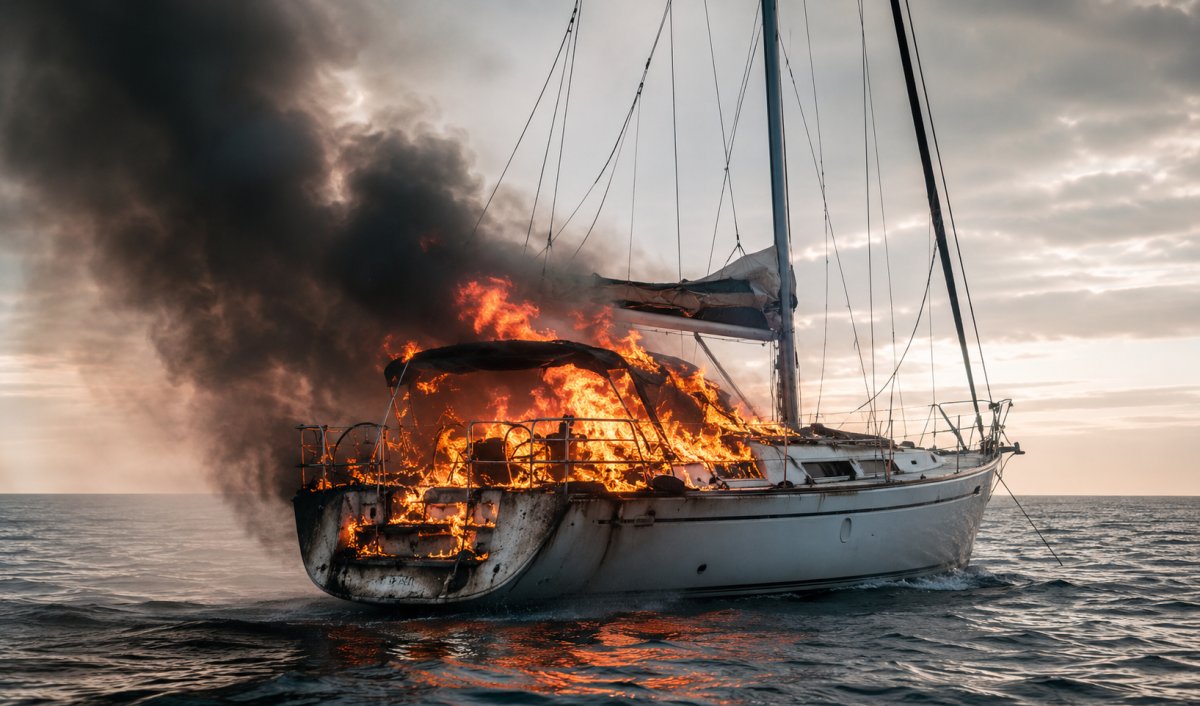
Fire remains one of the most feared risks in recreational marine insurance. Modern vessels contain increasingly sophisticated electrical systems, batteries, generators, and electronics. When a fire occurs aboard a boat, it often spreads rapidly and can result in a total loss. Unlike many automotive claims, there is frequently little opportunity for partial recovery once a vessel is heavily damaged by fire.
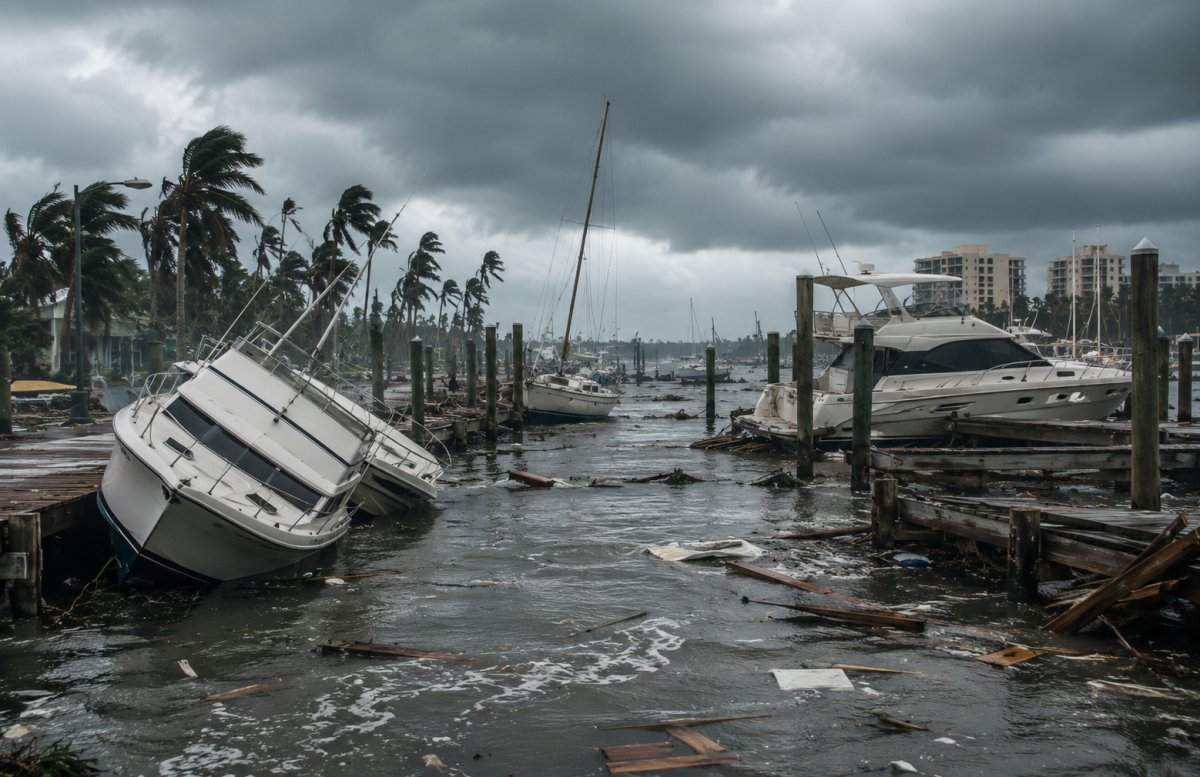
Severe weather represents another major challenge. Hurricanes, tropical storms, storm surges, and extreme wind events can destroy entire marinas within hours. For insurers, these catastrophic events create concentrated losses that can erase years of collected premiums in a single season.
Sinking and water ingress continue to generate expensive claims across all vessel categories. A failed through-hull fitting, damaged bilge system, or maintenance issue can quickly turn into a major loss event.
Groundings remain among the most common incidents in recreational boating. What initially appears to be a minor impact often reveals hidden structural damage, propeller issues, shaft misalignment, or expensive hull repairs.
These risks explain why marine insurance pricing often appears disconnected from how frequently an owner uses the boat. Insurers focus heavily on potential claim severity. A vessel may sit quietly in a marina for months, but if a hurricane, fire, or sinking event occurs, the resulting claim can be enormous.
Why Premiums Continue to Rise
The marine insurance industry faces many of the same inflationary pressures affecting the broader economy.
Repair costs have increased dramatically over the past several years. Modern boats contain sophisticated electronics that are expensive to replace. Specialized marine labor remains in short supply in many regions. Parts availability continues to create delays and higher costs. Composite materials, engines, navigation equipment, and luxury interior components have all become more expensive.
Climate-related claims are adding additional pressure. Coastal regions that historically generated stable results are experiencing more frequent severe weather events. Insurers must account for these risks when calculating premiums.
At the same time, vessel values have increased significantly in many segments of the boating market. Higher insured values naturally lead to larger potential claims, requiring insurers to collect more premium to maintain profitability.
The result is a market where many owners feel they are paying more while receiving little additional benefit. From the insurer's perspective, however, rising premiums often reflect rising risk rather than expanding profit margins.
Is Boat Insurance Actually Profitable?
Many boat owners assume insurers are earning extraordinary profits from marine policies. The reality is more nuanced.
Marine hull insurance remains a profitable business when managed correctly, but profitability depends heavily on risk selection and portfolio quality.
According to recent industry data, global ocean hull premiums approached $10 billion in 2024, while the broader recreational boat and yacht insurance market is estimated at roughly $12 to $13 billion in annual premiums. Loss ratios in Europe have remained around 60 percent, while some markets in the United States and Asia have improved to below 50 percent in recent years.
These numbers matter because insurers typically target loss ratios between 50 and 65 percent. In simple terms, that means approximately half to two-thirds of premium income is expected to be paid out in claims. The remaining portion must cover operating expenses, reinsurance costs, administration, and ultimately generate profit.
The broader property and casualty insurance sector has generally operated with combined ratios below 100 percent in recent years, indicating underwriting profitability. Marine insurance is no exception. Well-managed portfolios can generate attractive returns, particularly when insurers focus on experienced owners, lower-risk navigation areas, and properly maintained vessels.
However, profitability is not distributed evenly. A portfolio filled with hurricane-exposed vessels, inexperienced operators, or aging boats can quickly become unprofitable.
Why Some Regions Pay Far More Than Others
Location has become one of the most important variables in marine insurance pricing.
Owners operating in protected inland waters generally benefit from lower premiums. The probability of severe weather losses is lower, navigation risks are often reduced, and claims tend to be smaller.
The picture changes dramatically in regions exposed to hurricanes and tropical storms.
Florida remains one of the most challenging markets for marine insurers. The state combines a massive boating population with regular exposure to major weather events. The Caribbean presents similar challenges, particularly during hurricane season.
As a result, insurers have become increasingly selective about the vessels they insure, the navigation areas they permit, and the coverage terms they offer. Some carriers have reduced exposure entirely, while others have introduced stricter underwriting standards and higher premiums.
For owners in these regions, insurance costs are often influenced as much by geography as by the vessel itself.
The Future of Marine Insurance
Although the industry remains heavily dependent on traditional underwriting methods, change is beginning to emerge.
Modern vessels generate more data than ever before. AIS systems, GPS tracking, engine monitoring, maintenance records, marina information, and weather exposure data can all provide a far more detailed picture of actual risk.
Many observers believe future insurance models will increasingly reward owners based on real-world behavior rather than broad vessel categories. A carefully maintained yacht operating in low-risk waters may eventually receive substantially different pricing than an identical vessel exposed to higher-risk conditions.
Artificial intelligence and advanced analytics are likely to accelerate this transition. Rather than replacing underwriters, these technologies may help insurers understand risk with greater precision and improve transparency for policyholders.
For boat owners, that could ultimately mean a fairer system where premiums better reflect actual exposure rather than generalized assumptions.
A Market Under Pressure but Still Essential
Despite growing frustration among owners, marine insurance remains one of the most important components of responsible boat ownership.
The reality is that vessels have become more expensive, repairs have become more costly, and weather-related risks have increased across many regions. These trends help explain why premiums continue to rise even when a boat spends most of its time tied safely to a dock.
At the same time, the marine insurance industry remains profitable, competitive, and increasingly focused on better risk segmentation. The owners who understand how insurers evaluate risk are often in the strongest position to secure favorable coverage and pricing.
As the industry evolves, the biggest question may not be whether insurance becomes cheaper, but whether technology finally allows premiums to reflect how individual boats are actually used. For many owners, that would be a welcome change in a market that has long relied on broad assumptions rather than real-world behavior.
Thank you for reading this article.
We're real people who love boats, the marine industry, and the stories behind them.
What would you like to read about next?
Tell us which boats, brands, marinas, destinations, companies, or marine industry topics you would like us to cover.
GlobalBoat Feedback
Use your own language — 🇺🇸 English, 🇯🇵 Japanese, 🇪🇸 Spanish, 🇫🇷 French, 🇮🇹 Italian, 🇵🇹 Portuguese, 🇨🇳 Chinese, 🇰🇷 Korean, or any other language.
🌍 We understand them all.
At GlobalBoats.World, our mission is simple: to help boat owners, brokers, dealers, marinas, manufacturers, and marine businesses grow, connect, and succeed.
Share your ideas, leave a comment, and let us know how we can create even more valuable content for you.
Fair winds,
The GlobalBoats.World Team