







How the 2026 Iran–US Conflict Is Reshaping Dubai’s Yacht Market
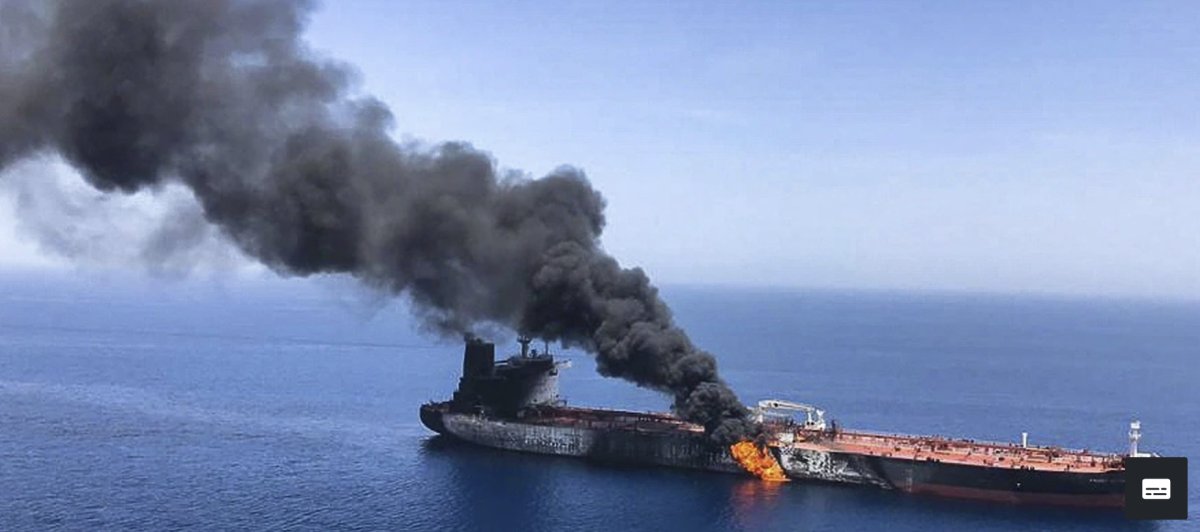
The escalating confrontation between Iran, the United States, and Israel since late February 2026 has significantly disrupted the luxury yacht industry across Dubai and the wider Gulf region.
What initially appeared to be another geopolitical escalation has evolved into a direct operational and financial shock for superyacht owners, charter operators, brokers, insurers, and marina infrastructure throughout the Middle East.
As of May 2026, the Gulf yacht market is operating under heightened uncertainty, increased insurance exposure, logistical bottlenecks, and weakened buyer confidence. Dubai remains one of the world’s most important emerging superyacht hubs, but the current conflict has exposed the structural vulnerability of luxury maritime markets located near critical geopolitical chokepoints.
Organizers faced mounting pressure from international exhibitors, yacht manufacturers, and charter groups concerned about regional instability, flight disruptions, restricted airspace, and deteriorating risk perception among ultra-high-net-worth clients. Several European and American brokerage firms reportedly reduced participation plans even before the official postponement announcement.
The delay removed one of the Gulf’s most important annual sales catalysts. Traditionally, DIBS drives spring brokerage activity, regional networking, charter demand, marina occupancy, and high-value transactions across the UAE and Saudi markets. Its disruption immediately slowed deal flow across the sector.
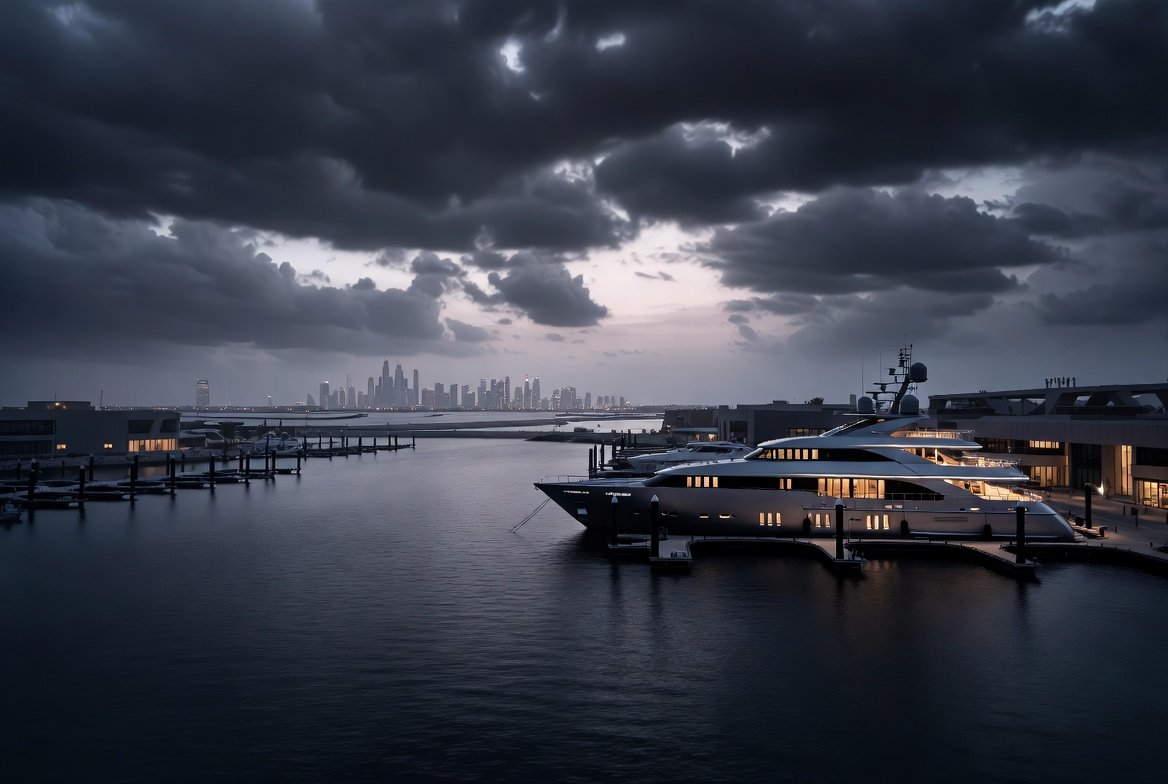
The Strait handles roughly one-fifth of global oil shipments and serves as the primary maritime gateway connecting the Persian Gulf with the Arabian Sea. For the yacht sector, even limited disruption created immediate consequences.
Several superyachts were effectively stranded in Dubai and neighboring marinas during peak tension periods as owners delayed departures and captains reassessed routing risks. Yacht deliveries from European shipyards faced delays, while support vessels and supply chains encountered higher transit costs and longer routing times.
Maritime security consultancies warned clients that “operational disruption for yachts is highly likely,” particularly for vessels operating near strategic shipping corridors. As a result, war-risk insurance premiums rose sharply for Gulf-based yacht operations, especially for vessels above 40 meters.
Some UAE marinas also temporarily operated under restricted conditions due to elevated maritime security protocols and regional military activity.
For large motor yachts, fuel remains one of the most significant operating expenses. Long-range cruising, repositioning voyages, and charter operations became materially more expensive within weeks.
The effect was particularly visible in the Gulf charter market, where clients began postponing bookings or relocating trips to perceived safer destinations such as the Mediterranean, Maldives, Seychelles, or Southeast Asia.
Brokerage firms reported increased caution among buyers considering high-value yacht acquisitions. While ultra-high-net-worth individuals remain relatively insulated from short-term economic shocks, geopolitical instability historically reduces appetite for discretionary luxury spending involving mobility, visibility, and operational complexity.
Brokerage activity also slowed as buyers adopted a “wait-and-see” approach. Transactions involving very large yachts became especially sensitive due to financing complexity, cross-border sanctions exposure, compliance scrutiny, and insurance uncertainty.
Industry participants additionally report tighter Know-Your-Customer (KYC) and Anti-Money Laundering (AML) reviews linked to evolving sanctions enforcement and regional financial monitoring.
The city remains one of the few global luxury hubs combining:
Saudi Arabia’s Vision 2030 investments continue driving marina construction, coastal tourism development, and ultra-luxury hospitality projects throughout the region. These initiatives still support long-term superyacht demand despite current instability.
Industry analysts expect the Gulf to remain attractive as a winter cruising destination once regional tensions stabilize. However, most experts currently anticipate cautious market conditions through at least late 2026.
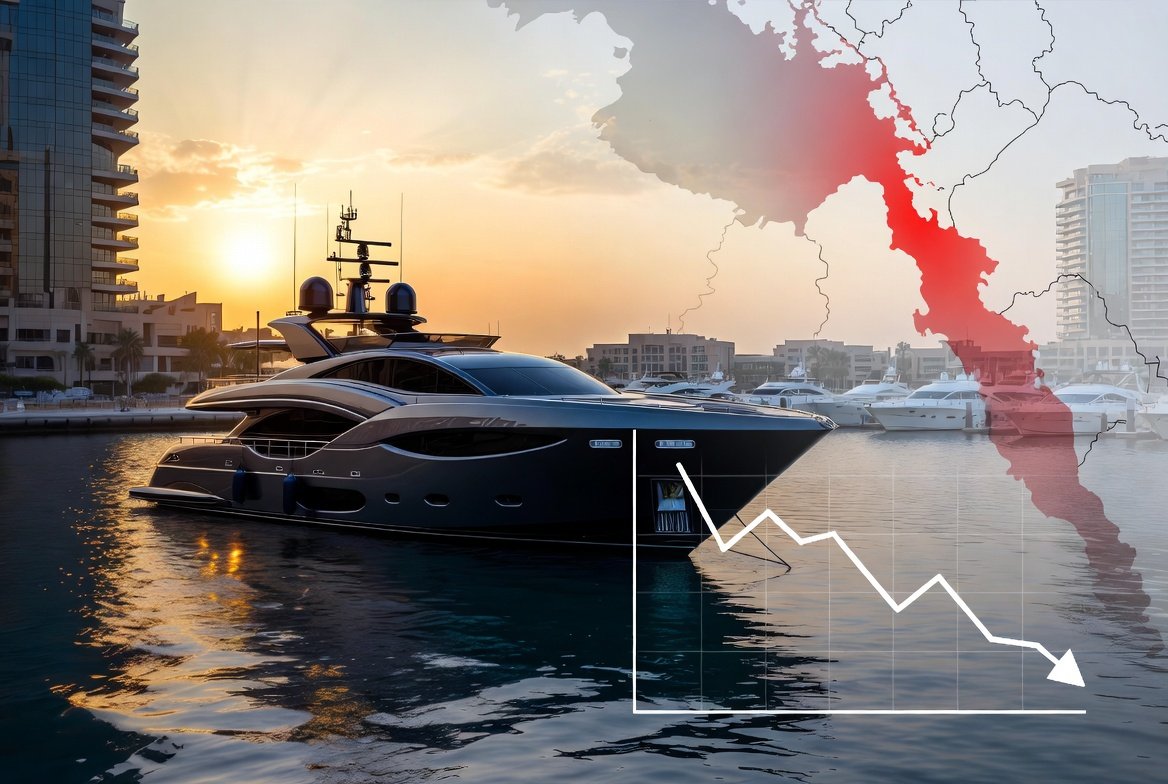
Some yacht owners and brokers are already showing increased pricing flexibility, particularly in the pre-owned segment. Sellers seeking liquidity or attempting to reposition fleets outside the Gulf may accept more aggressive negotiations than during the peak post-pandemic boom years.
At the same time, buyer preferences are shifting toward:
The events of 2026 have reinforced a broader industry lesson: geopolitical resilience increasingly matters alongside luxury, performance, and design.
For Dubai, the current crisis represents both a stress test and a strategic inflection point. The region’s long-term superyacht ambitions remain intact, but the market now faces a more cautious, security-conscious, and operationally complex environment than at any point since the pandemic recovery cycle.
As of May 2026, the Gulf yacht market is operating under heightened uncertainty, increased insurance exposure, logistical bottlenecks, and weakened buyer confidence. Dubai remains one of the world’s most important emerging superyacht hubs, but the current conflict has exposed the structural vulnerability of luxury maritime markets located near critical geopolitical chokepoints.
Dubai International Boat Show Delayed Amid Security Concerns
The clearest public signal came from the postponement of the 2026 Dubai International Boat Show (DIBS), the Middle East’s flagship marine event. Originally scheduled for April 2026, the exhibition was moved to late November, with industry insiders suggesting the winter schedule may become permanent.Organizers faced mounting pressure from international exhibitors, yacht manufacturers, and charter groups concerned about regional instability, flight disruptions, restricted airspace, and deteriorating risk perception among ultra-high-net-worth clients. Several European and American brokerage firms reportedly reduced participation plans even before the official postponement announcement.
The delay removed one of the Gulf’s most important annual sales catalysts. Traditionally, DIBS drives spring brokerage activity, regional networking, charter demand, marina occupancy, and high-value transactions across the UAE and Saudi markets. Its disruption immediately slowed deal flow across the sector.
Strait of Hormuz Disruptions Created Operational Shockwaves
The temporary disruption and intermittent closure risks surrounding the Strait of Hormuz became the most critical operational factor affecting the regional yacht industry.The Strait handles roughly one-fifth of global oil shipments and serves as the primary maritime gateway connecting the Persian Gulf with the Arabian Sea. For the yacht sector, even limited disruption created immediate consequences.
Several superyachts were effectively stranded in Dubai and neighboring marinas during peak tension periods as owners delayed departures and captains reassessed routing risks. Yacht deliveries from European shipyards faced delays, while support vessels and supply chains encountered higher transit costs and longer routing times.
Maritime security consultancies warned clients that “operational disruption for yachts is highly likely,” particularly for vessels operating near strategic shipping corridors. As a result, war-risk insurance premiums rose sharply for Gulf-based yacht operations, especially for vessels above 40 meters.
Some UAE marinas also temporarily operated under restricted conditions due to elevated maritime security protocols and regional military activity.
Rising Oil Prices Increased Ownership and Charter Costs
The conflict also triggered sharp energy market volatility. Brent crude temporarily exceeded USD 100 per barrel during the height of escalation fears, increasing fuel costs across the global maritime sector.For large motor yachts, fuel remains one of the most significant operating expenses. Long-range cruising, repositioning voyages, and charter operations became materially more expensive within weeks.
The effect was particularly visible in the Gulf charter market, where clients began postponing bookings or relocating trips to perceived safer destinations such as the Mediterranean, Maldives, Seychelles, or Southeast Asia.
Brokerage firms reported increased caution among buyers considering high-value yacht acquisitions. While ultra-high-net-worth individuals remain relatively insulated from short-term economic shocks, geopolitical instability historically reduces appetite for discretionary luxury spending involving mobility, visibility, and operational complexity.
Charter Activity and Brokerage Momentum Slowed Significantly
Dubai and the UAE had become one of the fastest-growing superyacht regions globally between 2022 and 2025. Rising regional wealth, aggressive marina expansion, Saudi giga-projects, and increasing winter-season attractiveness fueled strong momentum.The 2026 conflict interrupted that trajectory.
Charter operators across the Gulf reported noticeable declines in bookings, particularly among international clients unfamiliar with regional dynamics. Many owners shifted vessels toward Mediterranean summer programs earlier than planned or delayed Gulf deployments entirely.Brokerage activity also slowed as buyers adopted a “wait-and-see” approach. Transactions involving very large yachts became especially sensitive due to financing complexity, cross-border sanctions exposure, compliance scrutiny, and insurance uncertainty.
Industry participants additionally report tighter Know-Your-Customer (KYC) and Anti-Money Laundering (AML) reviews linked to evolving sanctions enforcement and regional financial monitoring.
Dubai Still Retains Long-Term Strategic Advantages
Despite short-term disruption, Dubai continues to possess structural strengths that support long-term recovery potential.The city remains one of the few global luxury hubs combining:
- political ambition,
- world-class aviation infrastructure,
- tax advantages,
- luxury real estate growth,
- expanding marina capacity,
- and proximity to rapidly growing Gulf wealth.
Saudi Arabia’s Vision 2030 investments continue driving marina construction, coastal tourism development, and ultra-luxury hospitality projects throughout the region. These initiatives still support long-term superyacht demand despite current instability.
Industry analysts expect the Gulf to remain attractive as a winter cruising destination once regional tensions stabilize. However, most experts currently anticipate cautious market conditions through at least late 2026.
Buyers May Gain Negotiating Power in 2026
Periods of geopolitical uncertainty often create temporary inefficiencies in luxury asset markets, and the yacht industry is no exception.Some yacht owners and brokers are already showing increased pricing flexibility, particularly in the pre-owned segment. Sellers seeking liquidity or attempting to reposition fleets outside the Gulf may accept more aggressive negotiations than during the peak post-pandemic boom years.
At the same time, buyer preferences are shifting toward:
- long-range cruising capability,
- operational flexibility,
- fuel efficiency,
- modern navigation and security systems,
- and yachts suitable for multiple seasonal regions.
The events of 2026 have reinforced a broader industry lesson: geopolitical resilience increasingly matters alongside luxury, performance, and design.
For Dubai, the current crisis represents both a stress test and a strategic inflection point. The region’s long-term superyacht ambitions remain intact, but the market now faces a more cautious, security-conscious, and operationally complex environment than at any point since the pandemic recovery cycle.