








Washington Boat Builders: From Rugged Aluminum Fishing Boats to Multi-Million-Dollar Yachts – The Soul of the Pacific Northwest
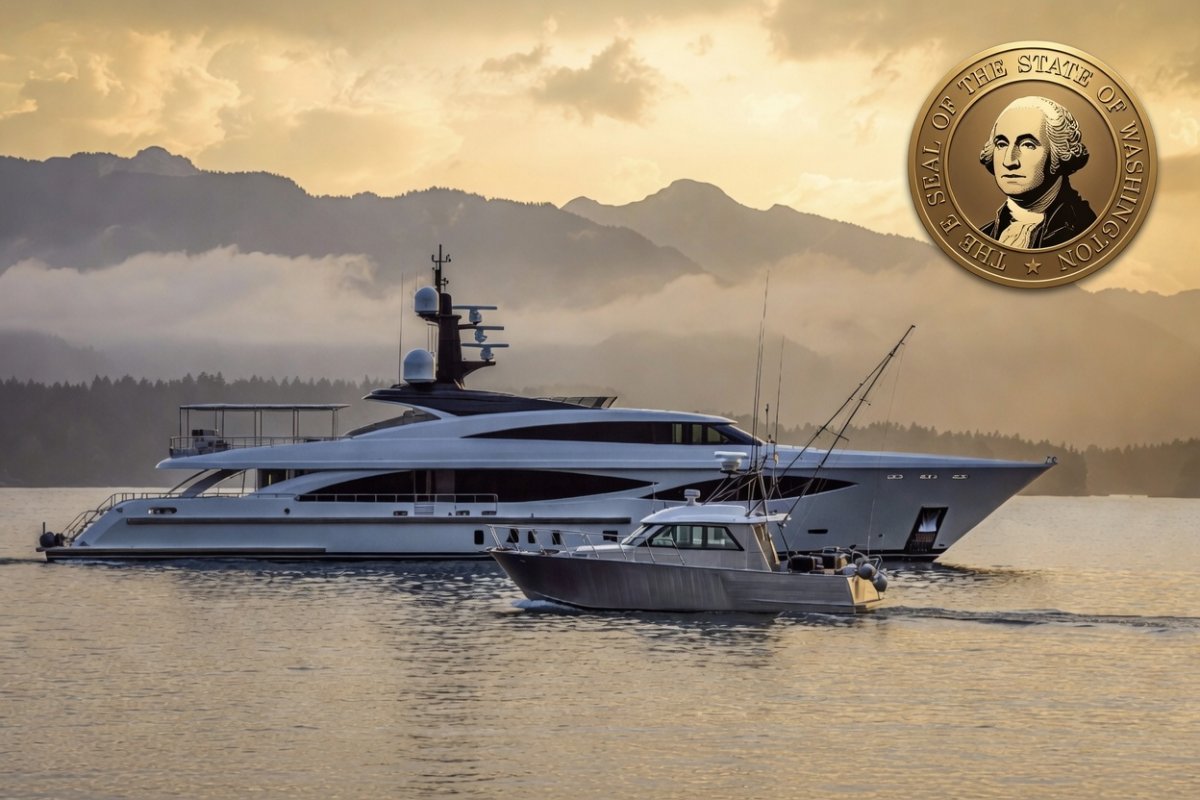
Washington State, USA.
Washington Boat Builders: From Rugged Aluminum Fishing Boats to Multi-Million-Dollar Yachts – The Soul of the Pacific Northwest
(Part 1 – USA West Coast Boat Builders Series)
Imagine this: It’s 4 a.m., pitch black, pouring rain.
A 25-foot Hewescraft aluminum skiff powers through six-foot swells off the Washington coast. The fisherman at the helm isn’t worried — he knows his boat was literally built for this. Two hundred miles away in a brightly lit hall in Seattle, craftsmen at Delta Marine are hand-laying carbon fiber for a 200-foot superyacht worth tens of millions of dollars. Same state. Same DNA. Different worlds. This is Washington — where boats aren’t just built. They are forged by the Pacific Northwest itself.
The Rugged School of the Pacific: Why Washington Boats Are Different
The Pacific Northwest is no gentle sailing ground. Icy currents from Alaska meet powerful winds, strong tides, and unpredictable weather. These harsh conditions have shaped one of America’s toughest and most respected boatbuilding cultures.
Here are the hard facts that make you want to know more:
- Hewescraft (Colville, WA) has been manufacturing rugged aluminum fishing boats since 1948 — over 75 years. They are one of the few builders in the industry (and the only one in the Pacific Northwest) that engineers boats to full ABYC standards. Their boats regularly survive decades of brutal commercial use.

- Cutwater Boats & Ranger Tugs (Fluid Motion – Arlington, Kent, Auburn, Monroe) are famous for fuel-efficient pilothouse cruisers with exceptional range — some models easily exceed 1,000 nautical miles on a single tank, perfect for long coastal journeys to Alaska.

- All American Marine (Bellingham, WA) builds advanced aluminum catamarans used not only by private owners but also for scientific research, passenger transport, and even military applications.

- Munson Boats (Burlington, WA) specializes in welded aluminum landing craft and workboats ranging from 23 to 65 feet.

- Delta Marine (Seattle) and Westport Yachts produce world-class luxury superyachts worth tens of millions of dollars, often with hybrid or electric propulsion systems.

Washington has one of the highest concentrations of aluminum boat builders in the United States. The rough waters of the Pacific and Puget Sound serve as the ultimate real-world testing ground.

But here’s what makes the story even more intriguing: Despite this proven quality and heritage, the industry faces serious challenges. In one of the most talked-about recent cases, a major state ferry contract worth over $700 million went to a shipyard in Florida instead of the local Nichols Brothers Boat Builders on Whidbey Island — even with a 13% in-state preference.
Why does a state known for building some of the toughest boats in America sometimes lose out on big domestic contracts?
That tension — between incredible craftsmanship and tough economic realities — is exactly what makes Washington’s boatbuilding scene so fascinating.
What Motivates Washington Boat Builders – Built Different
Washington boat builders are driven by something deeper than just profit. They operate in the same state as the global headquarters of Amazon, Boeing, and Microsoft — companies famous for long-term thinking, massive ambition, and relentless innovation. This environment shapes them.
They don’t chase short-term trends. Like the ancient Sequoia trees of the Pacific Northwest — some over 2,000 years old, standing tall against storms — Washington boat builders focus on strength, durability, and legacy.
Why they are different:
- Long-term thinking is in their DNA. Hewescraft has been perfecting aluminum boats for 75+ years. Many builders still emphasize hand craftsmanship and over-engineering rather than cutting corners for faster profits.
- Trust and real friendship matter here. In the tight-knit communities of Bellingham, Anacortes, and Colville, reputation is everything. A boat that fails in Alaskan waters doesn’t just lose a customer — it damages generations of trust.
- The winner’s mindset — They see themselves as survivors in one of the harshest marine environments on earth. Just as Boeing builds aircraft that dominate the skies and Microsoft writes code that runs the world, Washington boat builders create vessels that conquer the Pacific. Their boats aren’t pretty toys — they are tools built to win against nature.
This combination creates something unique: a blend of old-school Pacific Northwest grit with the forward-thinking, high-performance culture of the tech and aerospace giants that call Washington home.
The result? Boats that last decades, earn fierce customer loyalty, and quietly dominate their categories — from rugged aluminum fishing machines to multi-million-dollar explorer yachts.
Performance That Matters – Hard Numbers from Washington Builders
Washington boat builders don’t just talk quality — they deliver measurable performance where it counts.
Hewescraft (Colville)
- Over 75 years in continuous production
- Boats built with heavy-gauge aluminum (often 0.25 inch / 6.35 mm and thicker)
- Many commercial vessels still in daily service after 30–40+ years
Cutwater Boats & Ranger Tugs
- Exceptional fuel efficiency: many models cruise at 1.5–2.5 gallons per hour at displacement speeds
- Real-world range: several 30–40 ft models achieve 800–1,200+ nautical miles on a single tank
- Pilothouse design allows comfortable operation in conditions where most recreational boats stay at the dock
All American Marine (Bellingham)
- Builds high-speed aluminum catamarans with cruising speeds of 25–35+ knots
- Known for low fuel consumption and excellent stability — many vessels used for whale watching, research, and passenger transport in rough PNW waters
Munson Boats (Burlington)
- Standardized landing craft from 23 to 65 feet
- Designed for extreme load carrying and beach landings — widely used by government, research, and commercial operator
Delta Marine & Westport Yachts (Seattle area)
- Custom superyachts ranging from 100 to over 200 feet
- Projects routinely valued in the $20–100+ million range
- Advanced hybrid and diesel-electric systems that significantly reduce noise, vibration, and fuel use while maintaining transoceanic range
These builders consistently prove their performance in some of the most demanding waters on the planet — from the inside passage to Alaska and beyond.
Where the Industry Stands Today – Cold Reality & The Path Forward
The Washington boatbuilding industry is strong in reputation but faces tough economic pressure in 2026.
Cold Hard Reality (Numbers):
- High operational costs in Washington (taxes, regulations, wages, compliance) make it difficult to compete on large government projects despite 13% in-state preferences.
- Many smaller and mid-size builders report rising material and labor costs, with aluminum prices fluctuating and skilled labor in short supply.
- Overall U.S. recreational boat market is stable, but Washington builders feel the pressure from cheaper imports and southern competitors.
Where the Builders Stand:
- Premium and specialized builders (Delta Marine, Westport, All American Marine) remain very strong in the luxury, commercial, and expedition segments.
- Rugged aluminum specialists (Hewescraft, Weldcraft, Spartan, Munson) continue to dominate the tough-workboat and serious fishing markets.
- Mid-range builders like Cutwater/Ranger Tugs maintain loyal customers who value quality and efficiency over lowest price.
The Path to Success – How They Can Win:
- Focus on niches where quality, durability, and reputation matter more than price (expedition yachts, high-end aluminum workboats, research vessels).
- Leverage innovation: hybrid/electric propulsion, better fuel efficiency, and advanced materials.
- Build direct relationships with serious boaters, commercial operators, and international buyers who value PNW toughness.
- Emphasize the “Sequoia mindset” — long-term reliability, trust, and legendary longevity that cheaper boats simply cannot match.
Washington boat builders are not disappearing. They are evolving. The ones who stay true to their roots while embracing smart innovation will continue to thrive in the premium and professional segments.
The Future Belongs to the Tough – Why Washington Boat Builders Will Still Win
In 2026, Washington’s boatbuilding industry stands at a crossroads. The cold economic reality is undeniable: crushing regulations, high taxes, and aggressive out-of-state competition have already cost local yards major contracts worth hundreds of millions. Yet the best builders are not victims — they are survivors with a decisive edge.
The Winning Formula for the Best Builders:
The future belongs to those who refuse to compete on price and instead dominate on trust, longevity, and performance. The smartest yards are already doubling down on:
- Premium expedition and explorer vessels
- Hybrid and efficient propulsion systems
- Direct-to-customer relationships with serious owners who value reliability over flashy marketing
- International markets that respect “Built in Washington” as a seal of extreme quality
Washington’s Boat Builders:
From Rugged Aluminum Fishing Boats to Multi-Million-Dollar Yachts – The Soul of the Pacific Northwest
Key Players & Strengths:
- Hewescraft (Colville, est. 1948): Legendary heavy-gauge aluminum fishing boats, built to survive decades of brutal use.
- Cutwater Boats & Ranger Tugs: Highly efficient pilothouse cruisers with exceptional range (often 800–1,200+ nm).
- All American Marine (Bellingham): Advanced aluminum catamarans for commercial, research, and high-performance use.
- Munson Boats: Robust 23–65 ft workboats and landing craft.
- Delta Marine & Westport Yachts: World-class luxury superyachts in the $20–100+ million range.

Other Notable Builders:
- Pacific Boats (Marysville) – Custom aluminum skiffs & workboats
- Norstar Yachts (Bellingham)
- SAFE Boats International – Patrol, rescue & government boats
- Various smaller custom yards around Anacortes, Bellingham, and Seattle
But, What Makes Washington Truly Unique?
1. Heavy-Gauge Aluminum Workboat Culture
Washington has the highest concentration of high-quality aluminum boat builders in the United States. Many builders specialize in extremely robust, thick-walled aluminum vessels (often 6–8 mm and thicker). These boats are engineered for the most demanding commercial and expedition use, making them significantly more durable than typical recreational boats found in other states.------------------------------------------------------------------------------------------------------------
Many people ask: Why do Washington builders focus so heavily on aluminum when we also have steel?
The answer is simple but powerful:
Aluminum is simply better suited for the Pacific Northwest.
Here’s why:
Much lighter than steel — An aluminum boat of the same size is roughly 40–50% lighter than a steel one. This means better fuel efficiency, higher speed, shallower draft (important for many coastal and river areas), and easier trailering.
Naturally corrosion resistant — In the salty, cold waters of the Pacific, steel rusts quickly. Aluminum forms its own protective oxide layer, so it needs far less maintenance. Many Hewescraft boats are still in daily commercial use after 30–40 years.
Extremely strong when built thick — Washington builders often use heavy-gauge aluminum (6–10 mm and more). This makes the boats incredibly tough while still staying relatively light.
Easier to repair and modify — In remote areas like Alaska or the Inside Passage, aluminum is much easier and faster to weld and repair than steel.
Better for modern propulsion — The lighter weight works perfectly with efficient diesel engines, hybrids, and electric systems — a big advantage many Washington builders are using today.
Steel vs Aluminum in Washington context:
Steel is still used for very large commercial ships and some superyachts, but for boats between 20 and 80 feet (the sweet spot for fishing, work, and expedition boats), aluminum offers the best combination of strength, durability, low maintenance, and efficiency — exactly what the rough waters of the Pacific Northwest demand.
That’s why Washington has become one of the leading aluminum boatbuilding regions in the world.
No material is perfect — not even aluminum. Washington builders are well aware of its drawbacks:
Main Disadvantages of Aluminum:
Higher initial cost — Good quality marine-grade aluminum is more expensive than steel per pound.
Lower strength in very large vessels — For superyachts over ~50–60 meters, steel or composites often become more practical for structural reasons.
Welding requires high skill — Aluminum welding is more demanding than steel. Poor welds can lead to serious problems.
Lower heat resistance — Aluminum loses strength at high temperatures (important in case of fire).
Where does the aluminum come from?
Most marine-grade aluminum used in Washington comes from:
Domestic U.S. sources (especially from the Pacific Northwest and Midwest)
Canada (very close and important supplier)
Some high-spec alloys are imported from Europe or Australia.
Washington benefits from relatively short and stable supply chains compared to other regions. Many builders work with certified 5083 and 5059 marine aluminum alloys — the gold standard for saltwater use.
Despite its disadvantages, for the 20–80 foot segment (fishing boats, workboats, pilothouse cruisers, and smaller expedition yachts), aluminum remains the material of choice in Washington for one simple reason:
It offers the best overall balance of performance, longevity, and real-world usability in the Pacific Northwest.
Here’s a realistic overview of material costs in 2026 for marine-grade materials (approximate average prices):
 What does this actually mean for boat building?
Steel is by far the cheapest raw material, but the final boat often ends up more expensive due to heavy construction, more complex painting/coating systems, and higher maintenance over time.
Aluminum is more expensive upfront than steel, but offers big savings in fuel consumption, speed, and maintenance over the boat’s lifetime.
Fiberglass sits in the middle, but is less ideal for very rugged commercial or expedition use.
Washington builders’ philosophy:
They accept the higher material cost of aluminum because it perfectly matches the demanding environment of the Pacific Northwest. The extra investment pays off through:
Lower fuel consumption
Significantly less maintenance
Much longer service life (many aluminum boats last 40–60+ years)
Bottom line: In Washington, aluminum is not chosen because it’s cheap — it is chosen because it delivers the best long-term value for serious boaters.------------------------------------------------------------------------------------------------------------
2. “Pacific Northwest Tough” DNA
Because the local waters feature strong tides, cold currents, and frequent storms, boats built here are developed and tested under real extreme conditions. This results in a level of practical seaworthiness and toughness that is rarely matched with such concentration anywhere else in the U.S.3. Pilothouse & Tug Boat Specialization
The classic Pacific Northwest style — compact, efficient, and highly capable pilothouse boats with excellent range — was largely created and perfected in Washington. Brands like Ranger Tugs and Cutwater have become icons of this practical, all-weather cruising philosophy.4. High Density of Custom Superyacht Builders
Along with Florida and Maine, Washington is one of the few places in the United States where truly large custom yachts (over 40 meters) are built. Builders such as Delta Marine and Westport Yachts compete at the highest international level.5. Proximity to Boeing
Many Washington boat builders benefit directly from the aerospace engineering culture and supply chain of Boeing. This translates into superior materials, precision manufacturing, and rigorous quality control — an advantage that is almost unique to this region.6. Research & Government Boat Cluster
Washington has a strong cluster of builders focused on scientific research vessels and government/patrol boats. Companies like All American Marine regularly deliver advanced catamarans for universities, NOAA, and other agencies — a niche where the state is among the strongest in the country.So if you’re thinking about buying or building a boat that can truly handle rough waters, long distances, and many years of hard use — whether it’s a rugged aluminum fisherman, an efficient pilothouse cruiser, or a high-end expedition yacht — then Washington State is exactly the right place for you.
Summary:
- Washington is especially strong in aluminum boats (fishing, commercial, workboats).
- Very competitive in the luxury yacht segment (Delta Marine, Westport).
- Many builders benefit from the engineering culture near Boeing and the tough marine environment of the Pacific Northwest.
The Future: The winners will be those who stay true to their roots: uncompromising quality, real innovation in efficiency and durability, and direct relationships with customers who value boats that last a lifetime — or longer.
Washington doesn’t build the cheapest boats. It builds the ones that refuse to quit.
Thank You for Reading
Thank you for reading this article.
We're real people who love boats, the marine industry, and the stories behind them.
What would you like to read about next?
Tell us which boats, brands, marinas, destinations, companies, or marine industry topics you would like us to cover.
🌍 We understand them all.
At GlobalBoats.World, our mission is simple: to help boat owners, brokers, dealers, marinas, manufacturers, and marine businesses grow, connect, and succeed.
Share your ideas, leave a comment, and let us know how we can create even more valuable content for you.
Fair winds,