








Why the US Congress Refuses to Scrap the 70-Year-Old U-2 — And What That Tells Us About Boat Building
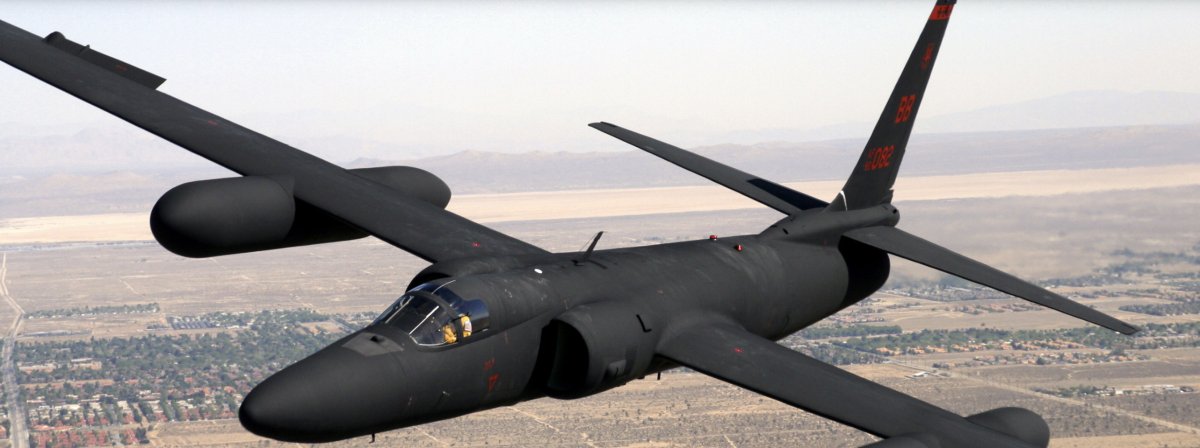
At the end of 2025, the US Congress made a remarkable decision: It overruled the US Air Force’s plans and decided not to completely retire the legendary U-2 “Dragon Lady”.
The U-2 was developed in the 1950s by Lockheed Skunk Works under the legendary aircraft designer Clarence “Kelly” Johnson. Its maiden flight took place on August 1, 1955 — meaning the aircraft is now over 70 years old.
The planes are primarily based at Beale Air Force Base, located about one hour north of Sacramento in California.
The U-2 is not a normal aircraft. It is an extremely high-flying reconnaissance plane that operates at altitudes above 21,000 meters (more than 70,000 feet) — well above normal air traffic and most fighter jets. With its unique, extremely long and slender wings, it looks almost like a glider that has accidentally climbed into the stratosphere.
What makes the U-2 so special?
- It can circle for hours at extreme altitude and monitor vast areas with its high-resolution sensors.
- Its range extends several thousand kilometers.
- It delivers real-time intelligence (images, electronic signals, communications) of a quality that many satellites and drones still cannot fully replace today.
- Unlike drones, a human pilot is on board who can make spontaneous decisions and react to unexpected situations.
The U-2 is currently stationed not only at Beale Air Force Base in California, but also at bases in Europe and the Middle East. It is mainly used for strategic reconnaissance over crisis regions, monitoring enemy troop movements, and overseeing sensitive areas.
Although the US Air Force has wanted to retire the U-2 for years and replace it entirely with modern drones, Congress pushed back and ensured that at least two (and possibly up to four) aircraft will remain in service.
Why? Because many experts and members of Congress believe that the U-2 still possesses capabilities that current drone technology cannot completely replicate — especially for certain sensitive missions under difficult conditions.
We consider this a wise and prudent decision.
But Joe, what does all this have to do with boats, yachts, and vessels?
A very good question.
The U-2 exists in its current form because its shape is the result of decades of physical optimization for a very specific, extreme mission. Its long, slender wings and overall design are not arbitrary — they are dictated by the unchangeable laws of physics at extreme altitude.
This brings us to the central question of this article:
After nearly 300 years of systematic development in aerodynamics and fluid dynamics — from Euler and Bernoulli to modern computational fluid dynamics — have we already discovered and understood the fundamental laws of physics well enough that the shape of aircraft and ship hulls is now largely a matter of selection rather than invention?
In other words: Are we mostly choosing the best hull form from an existing catalog of proven designs, while the real innovation today happens in electronics, propulsion systems, materials, and autonomy?
Just as the U-2’s iconic shape is dictated by the extreme physical demands of very high-altitude flight, most modern boats and vessels use hull forms that were largely developed decades — sometimes even over a century — ago.
The question is no longer “Can we invent a completely new hull shape?” but rather “Which existing hull form, optimized with today’s technology, is the best tool for the specific job?”
Have We Already Invented All Meaningful Hull Forms?
After nearly three centuries of intensive study in fluid dynamics and hydrodynamics, one provocative question arises:
Are all practical hull forms already discovered?
The laws of physics — drag, wave resistance, lift, stability, and buoyancy — are not new. They have been studied since the time of Isaac Newton, Daniel Bernoulli, and later William Froude, the father of modern ship hydrodynamics. Major hull concepts such as:
- Displacement hulls
- Planing hulls
- Semi-displacement hulls
- Catamarans and trimarans
- Wave-piercing hulls
- SWATH (Small Waterplane Area Twin Hull) designs
…were all developed decades, sometimes over a century ago.
Today, when naval architects design a new vessel, they rarely invent a completely new shape. Instead, they usually select the most suitable basic hull form from this established “catalog” and then optimize it using powerful modern tools like Computational Fluid Dynamics (CFD), tank testing, and advanced simulation software.
This mirrors the situation with the U-2: its shape is not arbitrary. It is the result of extreme optimization for a very specific operating environment. The same principle applies to boats and ships — the physical constraints of water are just as unforgiving as those of the upper atmosphere.
So the real question becomes:
Are we still in the age of revolutionary hull design — or have we entered the age of refinement and intelligent selection?
What Does Science Say? Are All Hull Forms Already Invented?
To answer this question seriously, we must look at the scientific literature and hydrodynamic research.
Key Findings from Studies:
- A comprehensive 2018 review published in the Journal of Ship Research and work by the Society of Naval Architects and Marine Engineers (SNAME) shows that the fundamental hull form families (displacement, semi-displacement, planing, multi-hull, etc.) have been well explored since the mid-20th century.
- Research from the David Taylor Model Basin (one of the world’s leading hydrodynamic research facilities) and various CFD studies (e.g. from MARIN in the Netherlands and SSPA in Sweden) indicate that radical new hull shapes rarely outperform optimized versions of existing forms when tested under real-world conditions.
A 2020–2023 study series by the Office of Naval Research (ONR) came to a very clear conclusion: The greatest gains in modern vessel performance no longer come primarily from new hull geometries, but from advanced materials, propulsion efficiency, hull appendage optimization, digital twin technology, and AI-driven design.
What This Means for Boat and Yacht Builders Worldwide
If the major hull forms are largely known and the biggest performance gains now come from optimization rather than radical new geometries, what does this mean for the global boat and yacht building industry?
It means we have entered a new phase of maturity in naval architecture.
The era of revolutionary hull invention is mostly behind us. The era of precision optimization and system integration has begun.
Today’s leading builders — whether in the USA, Netherlands, Italy, Australia, or Scandinavia — are no longer primarily focused on inventing completely new hull shapes. Instead, they concentrate on:
- Selecting the optimal base hull form for the vessel’s mission
- Refining every detail using advanced CFD simulation and model testing
- Integrating the hull with modern propulsion systems (hybrid, electric, hydrogen)
- Using new materials (high-strength aluminum, carbon composites, specialized coatings)
- Applying digital twins, AI-driven optimization, and active flow control
The real competitive advantage today lies less in “inventing a new hull” and more in how intelligently the known forms are executed and combined with other technologies.
This development is not a sign of stagnation. It is a sign of scientific and engineering maturity — similar to what happened in aviation after the 1960s, when the focus shifted from radical new airframe concepts to efficiency, electronics, and propulsion.
The best naval architects of our time are no longer revolutionary inventors. They are master integrators and optimizers.
Maybe a stupid question…
Is the knowledge about hull forms proprietary to the shipyards, or is it public domain?
Good question, Joe — and not a dumb one at all.
Here’s the honest answer:
The knowledge about hull forms is partially public, but largely strictly protected.
1. Fundamentals & General Knowledge (Common Register)
- The basic hull form families (displacement, planing, catamaran, trimaran, wave-piercing, SWATH, etc.) have been publicly known for decades.
- There is extensive public research available from institutions such as MARIN (Netherlands), SSPA (Sweden), the David Taylor Model Basin (USA), the University of Hamburg, and others.
- Many historical studies, resistance curves (e.g. according to Froude or ITTC standards), and general hull form databases are freely accessible or available for a fee.
2. Specific Know-How of the Shipyards (Proprietary to the Yards)
- The specifically optimized hull forms of individual builders - for example, the exact hull geometry of a commercial vessel are frequently protected as intellectual property and trade secrets.
- This includes:
- Fine-tuned hull lines (the exact geometry)
- Specialized appendages (foils, bulbous bows, stabilizers)
- Surface structures and coatings
- The integration with specific propulsion systems
These optimized forms represent the intellectual property of the shipyard and are often protected by patents, trade secrets, or simply by not being published.
3. The Reality in Practice
Most good shipyards maintain their own internal databases containing hundreds or even thousands of tested hull form variants. These databases are among their most valuable assets. They rarely share their best versions with the public.
While there is commercial software (such as Maxsurf, RhinoMarine, Siemens NX, etc.) and public databases, the truly high-performance, finely tuned hull forms almost always remain the property of the individual shipyards.

Conclusion
After nearly 300 years of systematic research in fluid dynamics and hydrodynamics, we have reached a mature stage in hull design. While revolutionary new forms are rare, the art of naval architecture is far from over. Today’s greatest achievements come from masterful selection, refinement, and intelligent integration of known hull forms with modern materials, propulsion systems, and digital technologies.
The U-2 still flies not because we cannot build newer aircraft, but because its form remains exceptionally well suited to its mission. The same principle applies to boats and ships: the best hull is not necessarily the newest — it is the one best matched to its purpose.
In the end, boat and yacht building remains both science and art.
Closing words:
Whether or not Leonardo da Vinci actually said it, the famous quote captures the essence of naval architecture:
“Simplicity is the ultimate sophistication.”
In naval architecture, true sophistication lies not in inventing ever more complex shapes, but in achieving the simplest, most efficient, and most effective form for the task at hand.
And that pursuit — of simplicity, elegance, and performance in harmony with the laws of physics — will continue to drive the best boat and yacht builders for generations to come.
Thank You for Reading
Thank you for reading this article.
We're real people who love boats, the marine industry, and the stories behind them.
What would you like to read about next?
Tell us which boats, brands, marinas, destinations, companies, or marine industry topics you would like us to cover.
At GlobalBoats.World, our mission is simple: to help boat owners, brokers, dealers, marinas, manufacturers, and marine businesses grow, connect, and succeed.
Share your ideas, leave a comment, and let us know how we can create even more valuable content for you.
Fair winds,