








China to Los Angeles Container Freight Rates: A Decade of Extreme Volatility (2016–2026)
Introduction
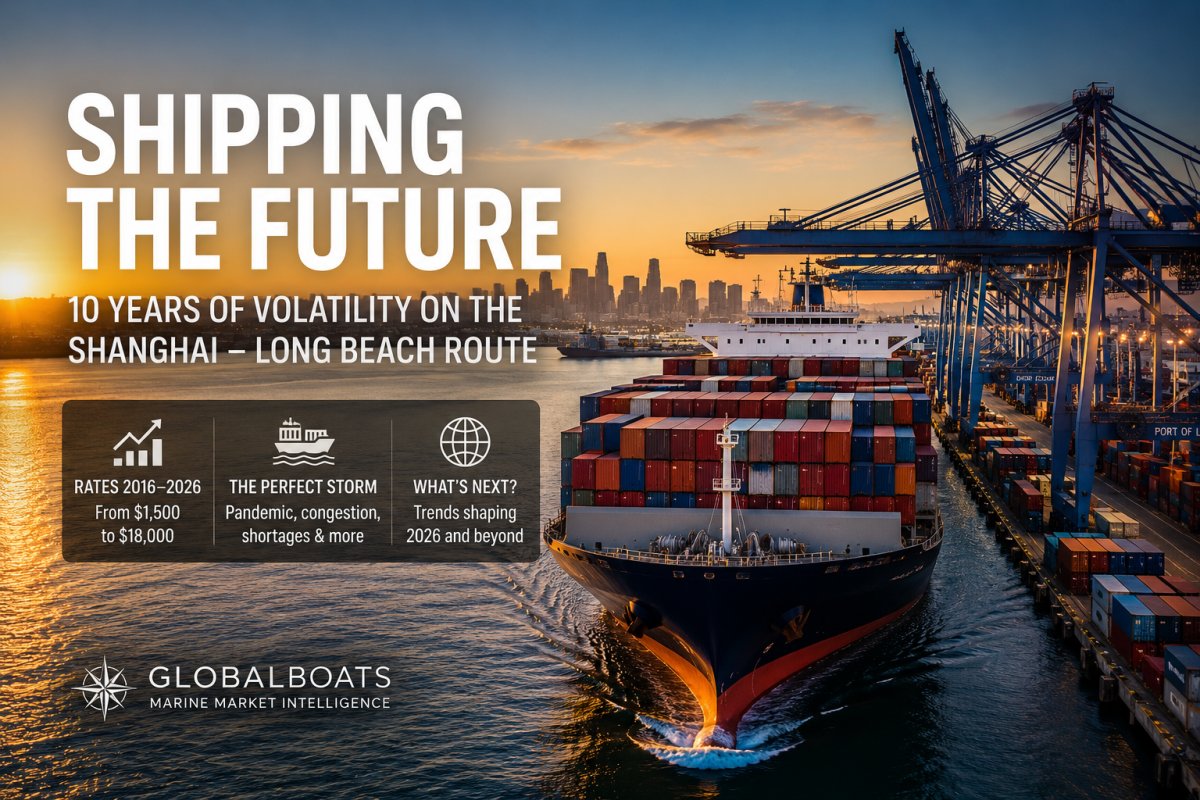
In the world of global trade, few things are as volatile and dramatic as container shipping rates. The route from Shanghai to Long Beach, California, stands as the most important transpacific corridor — and between 2016 and 2026, it experienced one of the wildest price rollercoasters in modern maritime history. Today, we take a detailed look at how freight costs evolved, why they exploded, and what is happening right now in 2026.
The Dramatic Evolution of Freight Rates 2016–2026
2016–2019: The Era of Extremely Low Prices Before the pandemic, shipping a 40-foot container from Shanghai to Long Beach was remarkably cheap. Spot rates typically ranged between $1,400 and $2,300, with long-term averages hovering around $1,650 – $1,900. For many American importers, this was a golden period of low logistics costs and healthy margins.
2020–2022: Total Chaos at Sea – The Great Disruption Then everything changed.
When COVID-19 hit, a perfect storm hit the shipping industry. Surging demand for Chinese goods in the United States collided with collapsing port capacity. The result was catastrophic:
Hundreds of container ships began piling up off the coast of California. At the peak of the crisis, more than 100 vessels were waiting outside the ports of Los Angeles and Long Beach. Some ships waited up to 40 days just to get a berth. Terminals were completely overwhelmed, containers were stacked everywhere, and there was a severe shortage of truck chassis to move cargo inland.
This unprecedented congestion drove freight rates to historic highs:
- Late 2020: $3,000 – $6,000
- 2021: $8,000 – $14,000 on average
- Peak in early 2022: up to $18,000 per 40ft containe
It was the most expensive and chaotic period the container shipping industry had ever seen.
Why Did Freight Rates Explode? The Perfect Storm of 2020–2022
The extreme surge in container rates from Shanghai to Long Beach was not caused by a single event, but by a dangerous combination of multiple crises hitting the global supply chain at the same time.
1. Demand Shock During the pandemic, American consumers shifted massively toward online shopping and home improvement. Demand for Chinese electronics, furniture, clothing, and consumer goods exploded. While factories in China were shut down or running at reduced capacity due to lockdowns, the sudden reopening created an enormous backlog of orders.
2. Port Congestion Catastrophe The most visible symbol of the crisis was the situation at the ports of Los Angeles and Long Beach. At the peak, over 100 container ships were anchored off the California coast, waiting for days or even weeks to unload. The ports simply could not handle the volume. Stacks of containers reached record heights on the docks, and there was a severe shortage of truck drivers and chassis to move the cargo inland. Some importers waited over 60–90 days from the moment their container arrived at the port until it reached their warehouse.
3. Equipment and Labor Shortages There was a global shortage of shipping containers. At the same time, many ports suffered from labor shortages due to illness, quarantines, and changed working conditions. This created bottlenecks at almost every step of the journey.
4. The Suez Canal Blockage In March 2021, the giant container ship Ever Given got stuck in the Suez Canal for six days, blocking one of the world’s most important shipping routes. Although this event lasted only a short time, it further worsened the already chaotic situation and added psychological pressure on the market.
5. Carrier Strategy Shipping companies took advantage of the extreme demand and reduced sailing schedules to keep capacity tight. This “blank sailing” strategy helped drive prices even higher.
As a result of this perfect storm, freight rates reached levels that were unimaginable just two years earlier — peaking at nearly $18,000 for a single 40-foot container on the Shanghai–Long Beach route in early 2022.
The Great Normalization – 2023 to 2026
After two years of pure chaos, the market finally began to calm down in mid-2022. The dramatic drop in freight rates was almost as shocking as the previous rise.
2023–2024: Sharp Decline As pandemic-driven demand cooled off, factories returned to normal production, and port congestion slowly eased, rates collapsed. By the end of 2023, the Shanghai to Long Beach spot rate had fallen below $2,000 for the first time since 2020. In some weeks, prices even dipped close to pre-pandemic levels.
2025: Fragile Stability Throughout 2025, rates remained relatively stable but clearly higher than the 2016–2019 period. The average All-In rate for a 40ft container hovered between $2,200 and $3,800, depending on the season and current events.
Current Situation – June 2026 As of June 2026, the market has become volatile again. According to the Drewry World Container Index, the spot rate for Shanghai to Los Angeles/Long Beach currently stands at approximately $3,473 per 40ft container (as of late May 2026).
Real market prices are currently trading in the range of $3,300 – $3,800 All-In. This is roughly double the average rate seen during the cheap years of 2016–2019, but still far below the crazy peaks of 2021–2022.
The main reasons for the renewed increase in 2025–2026 are:
- Ongoing crisis in the Red Sea (Houthi attacks), forcing many ships to sail around Africa
- Front-loading of cargo due to fears of new US tariffs on Chinese goods
- Strong consumer demand in the United States
Outlook 2026/2027 – What Will Influence Freight Rates Next?
Looking ahead into the second half of 2026 and 2027, the transpacific container market remains highly sensitive and unpredictable. Several major factors will determine whether rates stay elevated, rise again, or fall back toward more moderate levels.
Key Influencing Factors in 2026/2027:
1. Red Sea Crisis & Route Disruptions The ongoing Houthi attacks in the Red Sea continue to force many vessels to take the much longer route around the Cape of Good Hope. This reduces effective capacity on the Pacific route and keeps rates supported. Any resolution or escalation here will have an immediate impact.
2. US-China Trade Policy & Tariffs Potential new tariffs or trade restrictions under the current US administration could trigger another wave of front-loading (importers rushing to bring goods in before tariffs hit). This would create short-term spikes in demand and higher rates, especially in Q3 and Q4 2026.
3. New Vessel Capacity Reedereien have ordered a massive number of new mega-container ships. Many of these vessels will be delivered between 2026 and 2028. This significant increase in global capacity is expected to exert strong downward pressure on rates — if demand does not grow at the same pace.
4. US Consumer Demand & Economic Health The strength of the American economy and consumer spending remains one of the biggest drivers. A slowdown in retail sales or recession fears could quickly reduce import volumes and push rates lower.
5. Peak Season Effect Traditionally, the period from August to October sees the highest demand. A strong 2026 Peak Season could easily push Shanghai–Long Beach rates above $4,500 – $5,500 again.
Expected Scenario for 2026/2027 Most analysts currently forecast a volatile sideways movement for the remainder of 2026, with rates likely trading between $2,800 and $4,800. A significant drop back to sub-$2,500 levels appears unlikely in the short term due to ongoing geopolitical risks. However, by 2027, the influx of new vessel capacity could finally bring more sustainable relief — provided there are no major new disruptions.
Conclusion – Lessons from a Decade of Extreme Volatility
The transpacific container route from Shanghai to Long Beach has proven to be one of the most dramatic and unpredictable markets in global trade between 2016 and 2026. What began as an era of extremely cheap freight in 2016–2019 turned into total chaos during the 2020–2022 pandemic, followed by a painful correction and renewed volatility in 2025–2026.
This decade has clearly shown how fragile global supply chains truly are. A single virus, a blocked canal, or regional conflict in the Red Sea can dramatically reshape costs and delivery times for millions of businesses and consumers worldwide.
Key Takeaways:
- Low rates are not normal — the extremely cheap prices of 2016–2019 were partly the result of overcapacity and may not return in the same form.
- High rates hurt everyone — while carriers made record profits, many importers faced massive cost increases, delayed shipments, and lost sales.
- Geopolitics now matters more than ever — Red Sea disruptions, US-China relations, and tariff policies have become major drivers of freight rates.
- Resilience is the new priority — companies are increasingly diversifying suppliers (“China +1”), increasing inventory buffers, and exploring nearshoring options to reduce risk.
As we move through 2026 and into 2027, the market will likely remain volatile. While new mega-ships promise future relief, ongoing geopolitical tensions suggest that the era of stable and predictable freight rates is still far away.
For businesses involved in international trade, one thing is clear: understanding and closely monitoring container rates is no longer just logistics — it has become a critical strategic necessity.
Follow & Read More
Read more powerful stories at GlobalBoats.World.
If you would like more articles on specific topics, have questions about the Mark V, or want to share your feedback, please visit our feedback page: GlobalBoat Feedback
We’d love to hear from you.