








Benjamin Bénéteau – From Fishing Boat to Global Corporation
There was once a time when sailing boats and sailing ships had no engines. Today, that is almost impossible to imagine.
When Christopher Columbus returned from the New World in 1493, his flagship, the Santa María, had already been lost off Hispaniola. Instead, the Niña made the journey back to Spain and sailed up the Guadalquivir River towards Seville, just as countless merchant ships and exploration vessels of that era did.
Anyone who has ever been to Sanlúcar de Barrameda or Bonanza, where the Guadalquivir flows into the Atlantic Ocean, knows how dangerous this place is. Atlantic swell, strong winds from the north or west, shifting sandbanks and the powerful current of the Guadalquivir turn the river entrance into one of Spain's most challenging waterways.
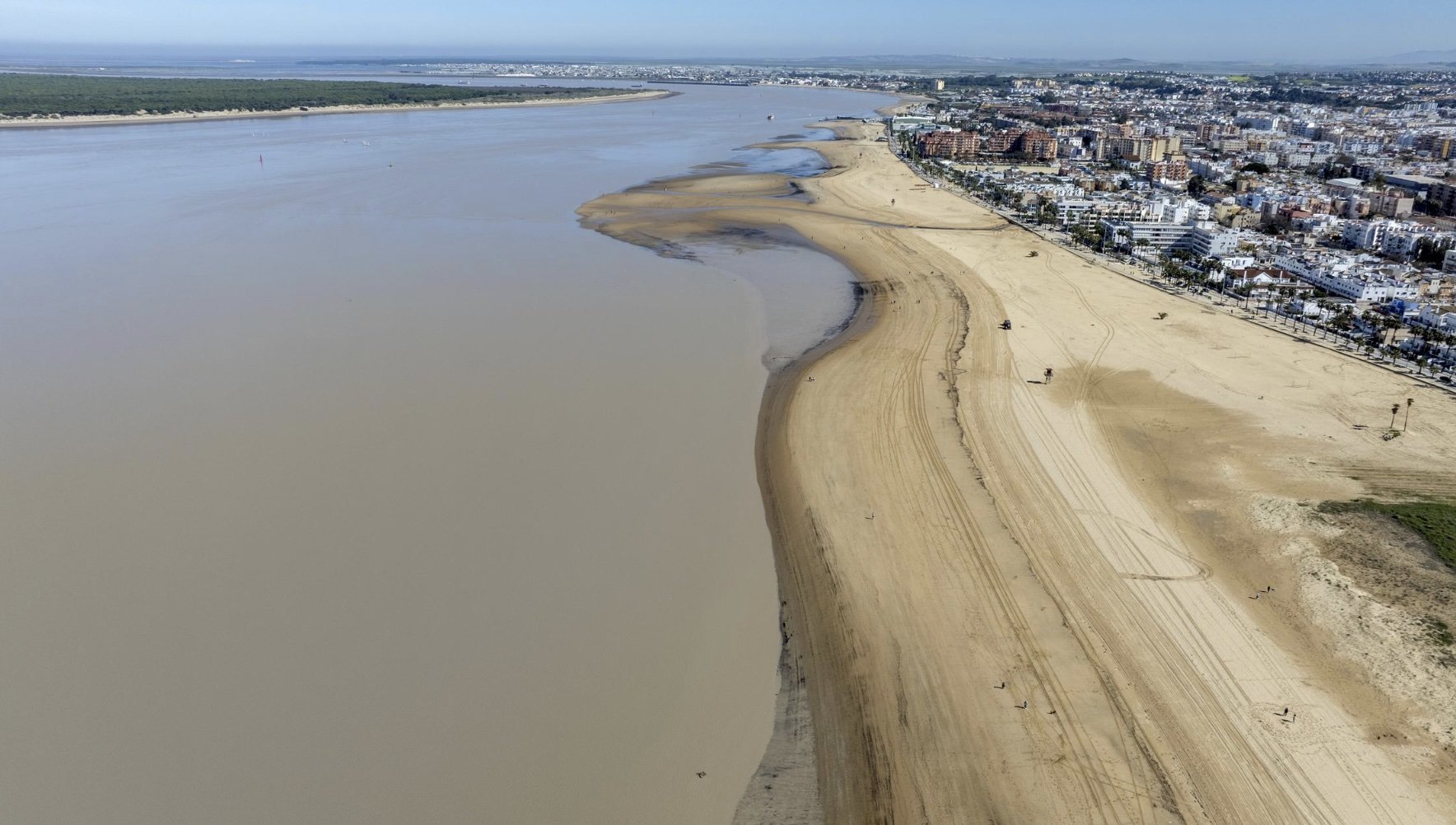
I have sailed against this current myself and, at times, had the feeling I was moving backwards. What an extraordinary achievement it must have been to navigate a large wooden sailing ship like the Niña through these waters and up the Guadalquivir towards Seville without running aground on a sandbank or becoming stranded. The legendary Santa María may never have returned from the New World, but she remains a symbol of the extraordinary seamanship of that era.
Sam Holmes experienced something similar on the south coast of England. Watch his video. During an outgoing tide, even the 5-horsepower diesel of his sailing boat was no longer powerful enough to enter the harbour.
Now we travel to France, more precisely to the region where Bénéteau comes from: Saint-Gilles-Croix-de-Vie on the Bay of Biscay. The Bay of Biscay – the sea that swallows ships with man and mouse. Heavy winds, a rugged coastline, the most difficult waters. And yet every day the local fishermen set out again in their small wooden boats, risking their lives to feed their families – for a few francs of fish sold at the market.
We are in the mid-1880s. In Mannheim, Carl Benz had just invented the first practical Otto engine. Many people realised that fitting an engine into a sailing boat would bring a considerable advantage. But because of the harsh conditions on board and at sea, engines could not simply be dropped into a ship.
Benjamin Bénéteau recognised this. His model were the Norwegians, who at that time were leading the way in equipping boats and ships with engines. What drove Bénéteau was – and this is the surprising part – not only the fascination with innovative technology. More importantly, he understood that technology creates profit. Why? Because the fishermen of the region gained a strategic economic advantage with an engine: they could bring their catch earlier, faster and more safely to the markets of Bordeaux, Nantes and Paris.
Early Years
Benjamin Bénéteau was born in 1843 in the small Atlantic fishing town of Saint-Gilles-sur-Vie on France's rugged west coast, today known as Saint-Gilles-Croix-de-Vie. Life here revolved around the sea. The Bay of Biscay was both a source of prosperity and constant danger, where storms, strong tides and unpredictable weather shaped everyday life.
Born into a modest family, Benjamin spent his childhood among fishermen, wooden boats and busy quays. At the age of six, he was adopted by his uncle François Houyère, a sailor who introduced him to life at sea. By the age of twelve, Benjamin was already working as a cabin boy aboard the sailing vessel Eliza, experiencing first-hand the power of the Atlantic and the realities of earning a living on the water.
His dream of becoming a boatbuilder began in the boatyard of his best friend's father. Alongside experienced craftsmen, he learned the traditional techniques of wooden boatbuilding, constructing the sturdy fishing vessels that dominated the Vendée coast. These included lougres (luggers), sardine fishing boats, smacks, dundees and small coastal working boats—simple, robust designs built to survive one of Europe's most demanding seas.
Benjamin quickly understood that a fishing boat was far more than a vessel. For every fisherman, it was the family's livelihood. Every improvement in speed, seaworthiness or reliability could mean a safer voyage, a larger catch and a better future.
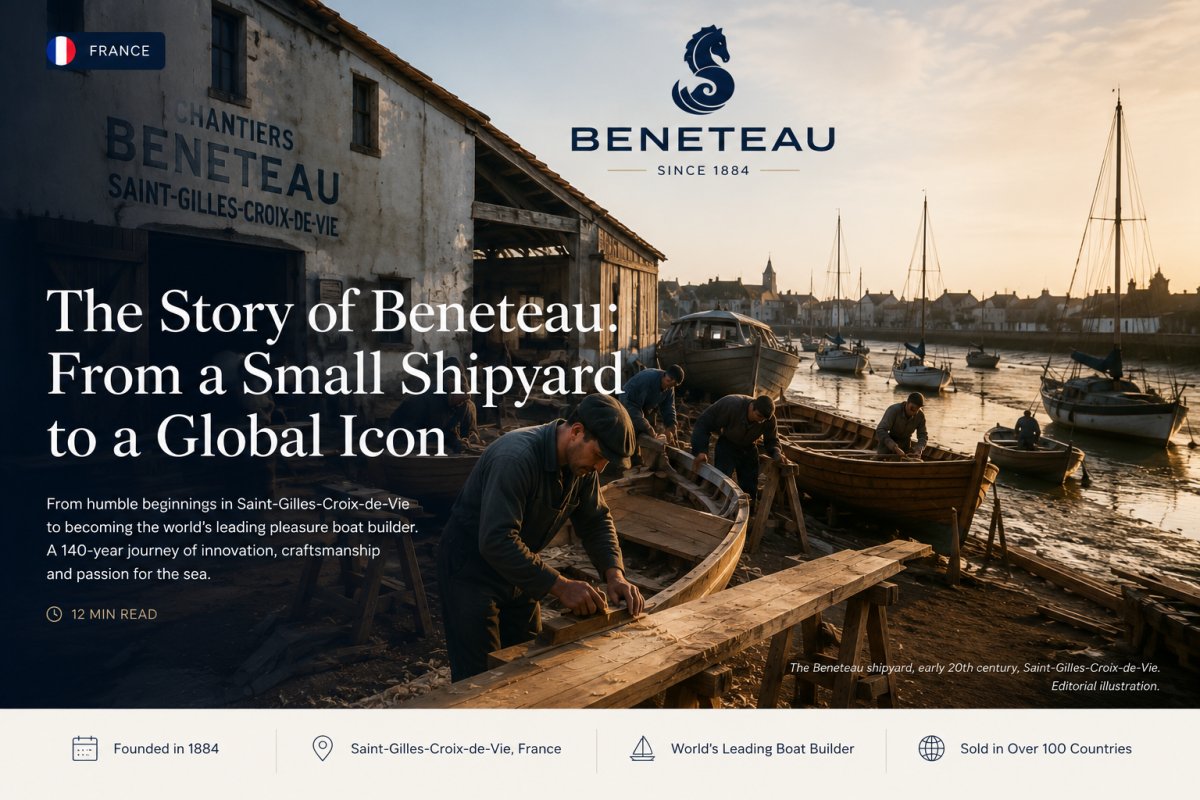
In 1884 Benjamin Bénéteau opened his own shipyard on the Quai des Greniers, just beside the bridge in Croix-de-Vie. He put his name on the sign: Bénéteau. The first drawing he signed that year was a 20-metre schooner; the plan still hangs at the entrance of the Groupe Bénéteau headquarters today.
He began by building traditional wooden sailing fishing boats – luggers, dundees and smacks. Performance was measured in a simple way: the first boat back to harbour sold its catch at the best price. Benjamin studied the English hulls that were then considered the finest and set out to make his own boats faster and better suited to the hard conditions of the Bay of Biscay.
The decisive step came in 1909. Against considerable local resistance he designed and launched the first engine-powered fishing boat in the region, a sardine boat he named Vainqueur des Jaloux – Conqueror of the Jealous. At first no one would buy it, so he took it out himself. The women from the canning factories believed the engine noise would scare the fish away. They stopped work, waited for him with stones, and the mounted police had to be called from Les Sables-d’Olonne and La Roche-sur-Yon. The dispute lasted months. Benjamin did not give up. His second motorised sardine boat he named La Paix – Peace.
In 1912 the yard produced its first pleasure sailing boat, the Père Peinard. Throughout these years the yard remained a modest, family-run concern serving the local fishing fleet. It was never large in numbers of workers or boats, but it was known for solid construction and for the quiet determination of its founder.
Benjamin Bénéteau died on 15 March 1928 in the town where he had been born, at the age of 68. The yard passed to his only son, André, then just 21, and to André’s young wife Georgina. Many in Croix-de-Vie believed the Bénéteau story was over. They were wrong.
The Transition
When Benjamin Bénéteau founded his shipyard in 1884, the business built one thing above all else: wooden fishing boats for the fishermen of the Bay of Biscay. Under his son André Bénéteau, who officially took over the family yard in 1928 together with his wife Georgina, this remained the company's core business. For decades, Bénéteau became known for robust wooden working boats, continuously refining their speed, seaworthiness and reliability.
The family business survived two World Wars, but by the late 1950s the market that had built Bénéteau was disappearing. Industrialisation, changing fishing methods and a declining coastal fishing fleet meant fewer orders for traditional wooden fishing vessels.
The third generation recognised that the future no longer belonged to commercial fishing. In 1964, André's daughter Annette Bénéteau and her brother André-Yves Bénéteau joined the company. The same year, Annette married Louis-Claude Roux, who would become one of the driving forces behind the transformation.
Instead of building boats for professional fishermen, the family entered the emerging recreational boating market. Using glass-fibre reinforced polyester (GRP), they introduced affordable, low-maintenance pleasure boats such as the Guppy and Flétan. At the Paris Boat Show in 1965, demand exceeded all expectations. Dealers placed orders immediately, proving that the future of boating was no longer commercial fishing—it was leisure on the water.
This decision changed the course of the company forever. Bénéteau was no longer simply a builder of fishing boats. It had become a pioneer of modern recreational boating.
Beneteau Today
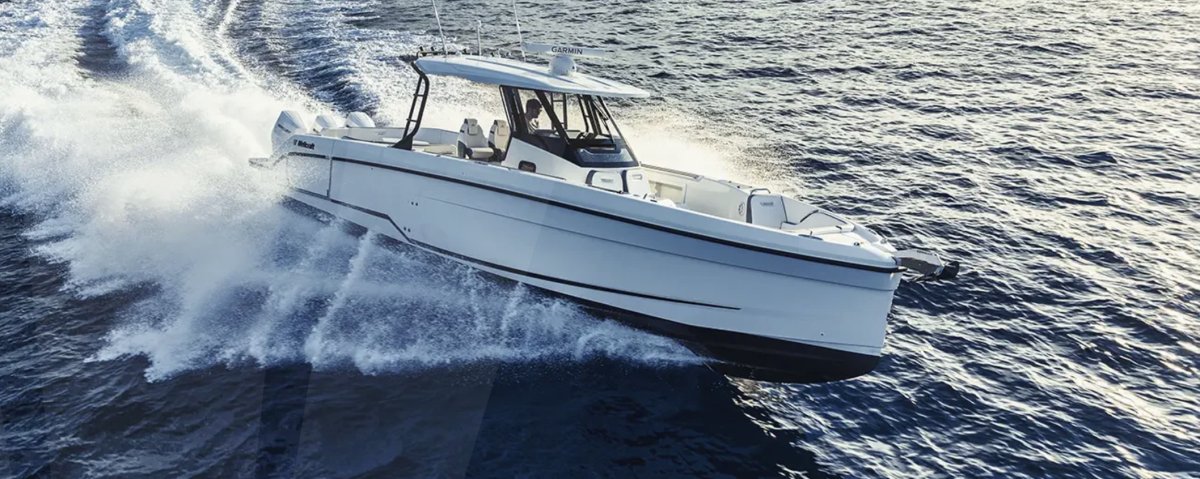
From a small family boatyard on the Bay of Biscay, Bénéteau has grown into one of the world's largest recreational boat builders. More than 140 years after Benjamin Bénéteau founded the company, the Group designs and builds sailing yachts, motorboats, catamarans and premium yachts under brands such as BENETEAU, Jeanneau, Lagoon, Prestige, Excess, Delphia, Four Winns, Wellcraft and Scarab. Today, the Group operates 16 production sites, employs more than 6,400 people, and sells its boats through a global network of over 1,200 dealers.
Unlike many historic European boat builders, Bénéteau has remained under the influence of its founding family. Through the family holding BERI 21, the Bénéteau-Roux family still controls around 54% of the company's share capital, ensuring that long-term decisions remain rooted in the values established by Benjamin Bénéteau more than a century ago. Today, Bruno Thivoyon leads the executive management, while members of the founding family, including Annette Roux and Louis-Claude Roux, continue to shape the company's strategic direction through its governance.
Today, Groupe Beneteau is regarded as one of the global leaders in recreational boatbuilding and one of the largest manufacturers of sailing yachts in the world. Together with competitors such as Bavaria, Hanse, Dufour and Fountaine Pajot in Europe, and Brunswick and Malibu in the United States, it continues to define the global pleasure craft industry. What sets Bénéteau apart is the breadth of its portfolio, covering everything from small day boats to bluewater cruising yachts, luxury motor yachts and catamarans.
Looking Ahead
The recreational boating industry is entering another period of transformation. Economic uncertainty, higher interest rates, changing customer expectations and the transition toward more sustainable propulsion systems present new challenges for every manufacturer. Yet Bénéteau has faced fundamental changes before. It survived two world wars, the collapse of the traditional fishing industry and several economic crises by adapting rather than resisting change.
Perhaps that is Benjamin Bénéteau's greatest legacy. He never built boats simply because he loved boats. He built better boats because he understood that innovation, craftsmanship and courage create opportunity.
That philosophy still guides the company today.
Fair winds and following seas have never been guaranteed. But if history is any indication, the Bénéteau family has earned the confidence that their boats will continue to give generations of sailors fair winds and a hand's breadth of water beneath the keel.
GB 2026